Tech
The Future of Secure Access: A Deep Dive into Vocal Login Technology

Introduction
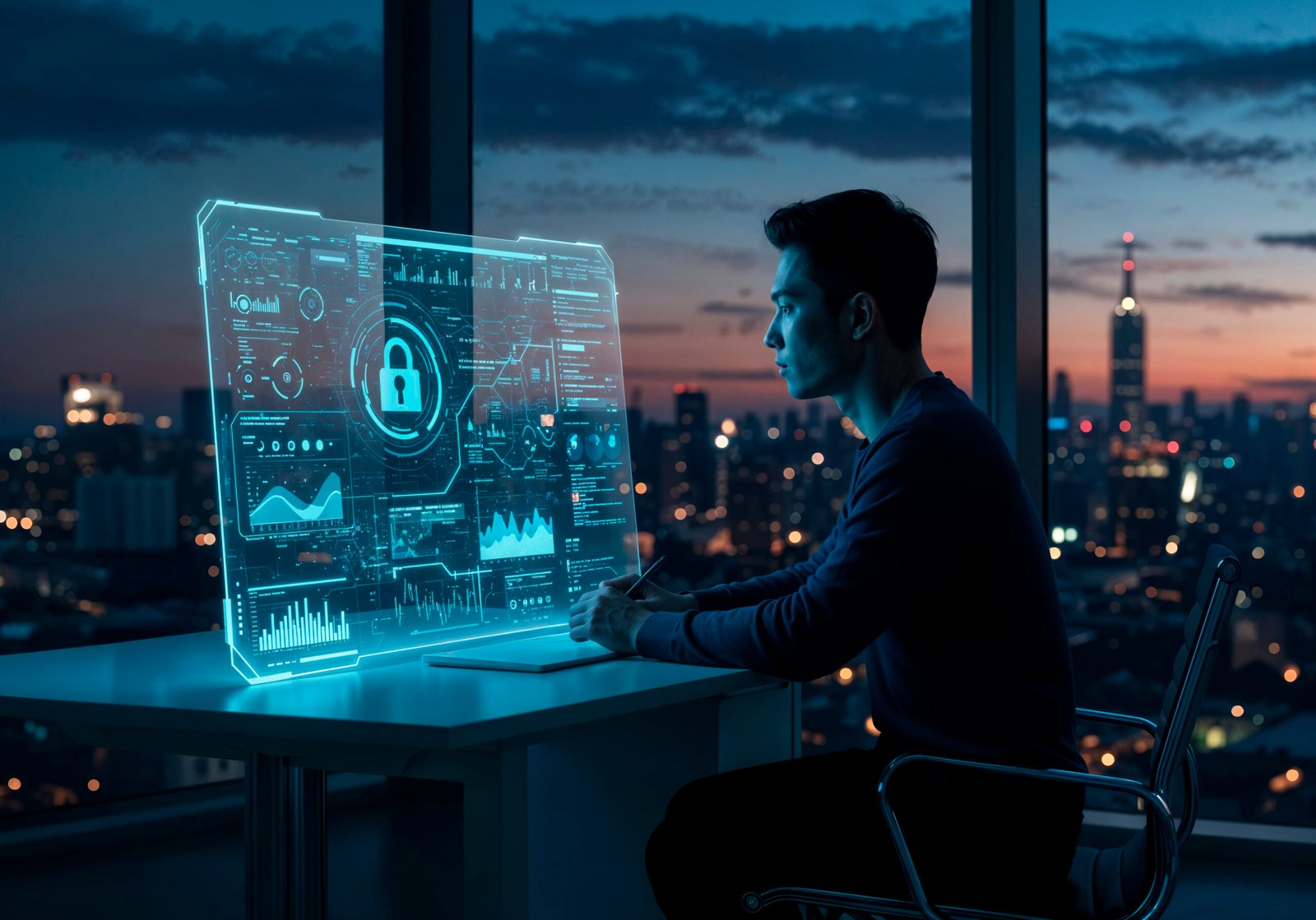
In an era where digital security breaches make headlines with alarming frequency, the quest for a truly secure, user-friendly authentication method has never been more urgent. Traditional passwords and PINs, once the gold standard for digital security, have proven vulnerable to hacking, phishing, and simple human forgetfulness. The answer to this growing security crisis appears to be moving beyond what you know to who you are. Biometric authentication—using unique physical or behavioral traits for identification—represents this evolution. Among the various biometric options, vocal login, also known as voice authentication or speaker recognition, is rapidly emerging as a powerful and convenient solution. This technology analyzes the unique acoustic characteristics of a person’s voice, such as pitch, tone, and cadence, to verify their identity with remarkable accuracy. This article will explore the transformative potential of vocal login, examining its underlying technology, its practical applications, the critical security challenges it faces, and its promising future in reshaping digital access control.
Understanding the Core Technology of Vocal Login
Vocal login operates on the principle that every human voice possesses a unique set of characteristics, much like a fingerprint. These characteristics are determined by the physical dimensions of the vocal tract, including the shape of the mouth, throat, and nasal passages, as well as learned speaking habits. Voice authentication systems capture a user’s speech sample and extract distinctive features to create a digital representation of their voiceprint. This process, known as feature extraction, is a critical component of the technology. A widely used method for this is the extraction of Mel-Frequency Cepstral Coefficients (MFCCs), which effectively capture the vocal characteristics that make each voice unique. These mathematical representations of the audio signal are then used as input for machine learning models, such as Support Vector Machines (SVMs) or Gaussian Mixture Models (GMMs), that can distinguish between different speakers with high precision. The combination of robust feature extraction and powerful classification algorithms forms the backbone of a reliable voice authentication system.
The Power of Multimodal Biometrics
While vocal login is a formidable technology on its own, its security and reliability are significantly enhanced when combined with other biometric methods, an approach known as multimodal biometrics. This strategy addresses the inherent limitations of any single biometric system. For example, a facial recognition system might be fooled by a high-quality photograph, while a voice system could be compromised by a recording. However, a system that requires both a face and a voice to be verified simultaneously creates a much higher barrier for would-be attackers. This dual-factor approach leverages the strengths of each modality to create a more robust defense against spoofing and environmental inconsistencies. Research has demonstrated that multimodal biometric authentication frameworks integrating voice and facial recognition significantly improve reliability and robustness compared to unimodal systems. By requiring two independent biometric characteristics, false acceptance and false rejection rates are minimized, creating a level of assurance that is far superior to traditional single-factor methods. This layered security model is becoming increasingly important for high-stakes applications where security cannot be compromised, making it a compelling argument for the adoption of voice-activated systems that are part of a larger security suite.
Real-World Applications and Use Cases
The practical applications of vocal login are diverse and expanding across numerous industries, demonstrating its versatility and growing acceptance. In the financial sector, voice authentication is already being used in mobile banking and call center environments to verify customer identities securely and efficiently. Banks are increasingly adopting voice biometrics to combat fraud and streamline the authentication process, reducing reliance on easily compromised security questions or passwords. For example, a system that combines voice recognition with password decoding can achieve accuracy rates of over 98% in mobile banking scenarios, providing a robust defense against forgery attacks. Beyond finance, voice authentication is also finding its way into physical access control systems. In offices, hotels, and even research facilities, contactless and AI-powered voice-enabled access systems are replacing traditional keys, RFID cards, and PIN codes, offering a more hygienic and cost-effective solution. These systems often use a smartphone as the interface, processing voice and facial data via a secure backend to grant or deny physical access, demonstrating the seamless integration of vocal biometrics into our daily lives.
Addressing Security Challenges: Spoofing and Deepfakes
Despite its promise, the widespread adoption of vocal login is not without significant hurdles. The most pressing challenge is the threat of spoofing, where an attacker attempts to fool the system using a recording of a legitimate user’s voice, a synthesized voice, or a deepfake. These attacks, including replay attacks and speech synthesis, are a major concern for voice authentication systems. To counter this, advanced systems are incorporating sophisticated detection techniques. One effective measure is liveness detection, which aims to ensure the voice sample comes from a live person rather than a recording. Another approach involves analyzing acoustic features in a time-frequency spectrogram to detect subtle anomalies introduced by backdoor attacks or data poisoning. For instance, a unified defense framework can integrate frequency-focused detection mechanisms to flag covert pitch-boosting and sound-masking attacks while also employing Convolutional Neural Networks (CNNs) to counter targeted data poisoning, reducing attack success rates from over 95% to as low as 5-15%. This ongoing battle between attackers and defenders is crucial to ensuring the continued viability of voice biometrics.
The Role of AI and Machine Learning in Enhancing Vocal Login
The incredible progress in voice authentication is largely due to the integration of advanced artificial intelligence and machine learning algorithms. These technologies are not just improving the accuracy of voice recognition but also making systems more adaptable and resilient. Deep learning models, for example, are being used to enhance feature extraction and classification, leading to higher performance even in the presence of background noise or linguistic variability. AI also plays a pivotal role in security through the detection of deepfakes and synthetic voices, where models like the fine-tuned Wav2Vec2 are used to verify the authenticity of a vocal sample. Furthermore, machine learning algorithms are integral to the dynamic adjustment of authentication thresholds, which can optimize the balance between security and user convenience. As AI continues to evolve, we can expect voice authentication systems to become even more intelligent, capable of learning and adapting to new threats and environmental conditions, thereby solidifying their place in the future of digital identity.
Conclusion
Vocal login technology stands at the forefront of the next generation of digital identity and access control. By leveraging the unique characteristics of the human voice and combining them with advanced AI and machine learning, it offers a powerful, convenient, and increasingly secure alternative to traditional passwords and PINs. Its applications are vast, spanning from mobile banking to physical security, and its integration into multimodal biometric systems provides a level of protection that is critical in today’s threat landscape. While challenges like spoofing and deepfake attacks persist, innovative defense mechanisms are continuously being developed to stay ahead of cybercriminals. As the technology matures and becomes more refined, vocal login is poised to become a ubiquitous part of our digital lives, making secure access as simple and natural as speaking.
Frequently Asked Questions (FAQ)
1. How does vocal login work?
Vocal login works by analyzing the unique physical and behavioral characteristics of a person’s voice. The system captures a voice sample, extracts distinctive features using algorithms such as Mel-Frequency Cepstral Coefficients (MFCCs), and creates a digital “voiceprint.” This voiceprint is then compared against a stored template to verify the user’s identity. Machine learning models are often used to improve the accuracy of this matching process.
2. Is voice authentication more secure than traditional passwords?
Yes, in many ways, voice authentication is more secure than traditional passwords. Passwords can be stolen, forgotten, or easily guessed, making them a weak link in security. Voice biometrics, on the other hand, are tied to a unique physical trait that is difficult to replicate. However, like any technology, it is not immune to sophisticated attacks such as deepfakes, which is why advanced systems use liveness detection and other anti-spoofing measures to maintain high security.
3. What are the main challenges facing vocal login systems?
The primary challenges are security-related, specifically the risk of spoofing attacks. These include replay attacks (using a recording of the user’s voice), speech synthesis (using a computer-generated voice), and deepfake technology. To counter these, systems must integrate robust liveness detection and advanced deepfake detection algorithms. Other challenges include performance in noisy environments and dealing with changes in a user’s voice due to illness.
4. What is multimodal biometric authentication and why is it important?
Multimodal biometric authentication uses two or more different biometric traits—such as voice and facial recognition—to verify a person’s identity. It is important because it significantly enhances security and reliability. While a single biometric system might be fooled by a specific type of attack, a multimodal system makes it exponentially harder for an attacker to bypass the system as they would have to compromise multiple biometric traits simultaneously.


Tech
The Creator’s Blueprint: Mastering OnlyFans Leak Protection, DMCA Takedowns, and Copyright Security in 2025

The digital marketplace has witnessed a revolutionary shift in content creation and consumption, with platforms like OnlyFans empowering millions of creators to monetize their work directly. Yet, with this unprecedented opportunity comes a formidable challenge that threatens the livelihoods and peace of mind of creators worldwide: the pervasive issue of content piracy. An estimated 50-70% of paid OnlyFans content ultimately finds its way onto unauthorized platforms, representing not just a financial hemorrhage but a profound violation of creator rights and personal boundaries . The phenomenon of “OnlyFans leaks” has evolved from isolated incidents into an organized piracy ecosystem, with automated bots and dedicated leak sites systematically stripping creators of their exclusive content . This comprehensive guide serves as your definitive roadmap to understanding, combating, and preventing OnlyFans content theft. Drawing upon legal expertise, creator experiences, and proven protection strategies, we will equip you with the knowledge to transform from a vulnerable creator into a formidable defender of your digital assets. Whether you are a newcomer navigating the platform or an established creator seeking to fortify your defenses, this blueprint will empower you to reclaim control over your content and safeguard your creative enterprise for the long term.
The Anatomy of an OnlyFans Leak: Understanding the Threat Landscape
To effectively combat OnlyFans leaks, creators must first understand the mechanisms through which their content is stolen and distributed. The digital piracy landscape has grown increasingly sophisticated, transforming from individual subscribers sharing screenshots into organized operations employing automated scraping tools and artificial intelligence . When a subscriber pays for access to exclusive content, they enter into a contractual agreement with the creator, agreeing to view content for personal, non-commercial purposes only . However, determined individuals circumvent platform security measures through screenshots, screen recording software, third-party downloading tools, and browser extensions designed specifically to capture streaming content .
The motivations driving leakers are varied and troubling. Some operate leak websites or forums where they compile stolen content from multiple creators, often monetizing these platforms through advertising revenue . Others seek status and recognition within online communities that prize access to exclusive material, while some harbor personal grudges against specific creators or subscribe to the misguided belief that digital content inherently belongs to the public domain . The emotional and financial toll on creators cannot be overstated. Discovering that intimate content shared with paying subscribers has been plastered across Telegram channels, Reddit threads, or dedicated leak sites represents not just a business crisis but a deeply personal violation that can cause significant psychological distress .
The financial consequences ripple outward from lost subscription revenue to devalued brand equity. When potential subscribers can access stolen content for free, the incentive to pay for official access diminishes substantially . This creates a devastating cycle where legitimate subscribers may cancel their memberships, new fans choose not to subscribe, and creators are forced to invest precious time and energy into chasing down infringements instead of producing the content that built their following . The scale of this problem is staggering, with only a fraction of leaked content ever removed from the internet, leaving creators to grapple with the permanence of unauthorized distribution .
Your Legal Arsenal: Understanding Copyright and Creator Protections
The moment you create an original photo, video, or piece of content, you automatically own the copyright to that work, granting you exclusive rights to reproduce, distribute, display, and create derivatives of your material . This automatic protection forms the foundation of your legal defense against content theft, empowering you to file DMCA takedown notices, demand removal of infringing content, and potentially pursue legal action against individuals who violate your rights . Copyright law protects your content regardless of its nature, whether explicit or innocuous, as long as it meets the threshold of originality . OnlyFans’ Terms of Service explicitly reinforce creator ownership, stating that all content uploaded belongs to the creator and that subscribers agree not to reproduce, copy, distribute, or exploit content without express written permission .
Beyond copyright protections, creators have additional legal avenues to pursue. The Digital Millennium Copyright Act (DMCA) provides a powerful framework for removing infringing content from websites, social media platforms, and search engine results . This legislation requires hosting providers and website operators to remove unauthorized content when properly notified by the copyright owner, creating a streamlined process for content removal . In jurisdictions with robust privacy protections, creators may also pursue claims under revenge porn laws or privacy statutes that prohibit the distribution of intimate images without consent . European law has taken an increasingly firm stance, classifying the unauthorized distribution of explicit content as sexual abuse, though enforcement remains challenging across many jurisdictions .
The legal landscape extends further to encompass personality rights and data protection frameworks. The general right of personality protects individuals from having their image displayed or distributed without consent, particularly in contexts involving intimate or explicit material . Data protection regulations like the General Data Protection Regulation (GDPR) offer additional recourse when personal information is involved, allowing creators to demand deletion of unlawfully processed data and potentially pursue damages for violations . Criminal prosecution may also be available, with statutes addressing violations of intimate privacy, defamation, and identity theft providing additional deterrents against malicious actors . Despite these comprehensive protections, the practical challenges of enforcement, particularly against anonymous leakers operating across international borders, mean that creators must adopt proactive and strategic approaches to content protection .
The DMCA Takedown Process: A Step-by-Step Guide
When you discover your OnlyFans content has been leaked, swift and methodical action is essential to contain the spread and assert your rights. The DMCA takedown process represents your most powerful and immediate tool for removing infringing content from the internet, and understanding its nuances can mean the difference between effective enforcement and prolonged vulnerability .
Documentation and Evidence Gathering
Before initiating any takedown requests, thoroughly document every instance of unauthorized content. This foundational step creates a comprehensive record that strengthens your claims and provides crucial evidence for subsequent legal action. Take clear screenshots showing the infringing content on the website, ensuring the full URL is visible in your captures . Record all URLs where your content appears, including search results, forums, social media posts, and any other platforms hosting your stolen material . Note the date and time of discovery, as this information may prove valuable in legal proceedings and helps establish a timeline of infringement . Gather whatever information you can about potential perpetrators, including usernames, profile information, or identifying details visible in comments or metadata . This comprehensive documentation serves dual purposes: it strengthens your formal takedown requests and provides a foundation for potential criminal or civil legal actions .
Filing Effective DMCA Takedown Notices
A properly drafted DMCA takedown notice includes several essential elements that satisfy legal requirements and increase the likelihood of compliance. Your notice must contain your full legal name and contact information, including physical address, email address, and telephone number . You must provide specific identification of the copyrighted work, which typically includes links to your original OnlyFans content demonstrating ownership . The notice should list the exact URLs where infringing content appears, allowing the receiving party to locate and remove the unauthorized material quickly . Crucially, you must include a statement, under penalty of perjury, that you have a good faith belief that the content is being used without authorization and that the information in your notice is accurate . While copyright registration is not required to file DMCA notices, registering your work with the U.S. Copyright Office provides significant advantages, including the ability to seek statutory damages of up to $150,000 per infringed work in federal court .
Navigating Challenges and Escalation Strategies
Not all platforms or websites comply readily with DMCA takedown notices, particularly those operating in jurisdictions with lax copyright enforcement or those that explicitly host pirated content. When a website ignores your takedown notice, escalate your efforts by contacting the website’s hosting provider and domain registrar . These service providers have legal obligations to respond to valid DMCA notices and can compel the website operator to remove infringing content or face suspension of their services . For content appearing in Google search results, submit a request through Google’s legal removal process to have the infringing URLs deindexed from search results . While this does not remove the content from the internet, it significantly reduces visibility since Google controls approximately 93-94% of the global search market . Consider leveraging Google’s intimate images hub, which is specifically designed to help adult content creators have unauthorized material removed from search results .
Proactive Content Protection: Preventing Leaks Before They Happen
While reactive measures like DMCA takedowns are essential, proactive prevention strategies significantly reduce your vulnerability to leaks and minimize damage when they occur. Implementing a comprehensive protection framework transforms your content operation from reactive crisis management to strategic risk mitigation .
Watermarking and Content Identification
Visible, strategically placed watermarks are among your most effective deterrents against casual piracy. Adding your username, logo, or OnlyFans URL prominently across every piece of content makes it harder for thieves to claim your work as their own and creates a clear marker of ownership when content appears on unauthorized platforms . Place watermarks in the center of images and videos rather than in corners where they can be easily cropped out, ensuring that your identifying information remains visible even when content is cropped or resized . Watermarking software and services are readily available, allowing you to batch process content efficiently without sacrificing quality . This simple practice sends a clear message to potential leakers that you take content protection seriously and provides immediate proof of ownership when pursuing takedowns .
Monitoring, Alerts, and Rapid Response
Early detection dramatically increases your ability to limit the spread of leaked content. Setting up Google Alerts for your creator name, stage name, and variations of these terms provides automated notifications when new instances of your content appear online . Reverse image searching tools like TinEye allow you to upload sample images and identify where they appear across the internet, helping you discover unauthorized distribution that might otherwise go unnoticed . Dedicated content protection services like Rulta and Bruqi offer comprehensive monitoring across the surface, deep, and dark web, proactively scanning for stolen content and initiating takedown requests on your behalf . These paid services can be particularly valuable for established creators facing ongoing piracy challenges, allowing you to focus on content creation while professionals handle the enforcement burden .
Audience Engagement and Subscriber Management
Your legitimate subscribers can become powerful allies in the fight against content theft. Educate your audience about the damage that leaks cause to your livelihood and the importance of respecting copyright . Include clear copyright notices in your bio and regularly communicate your stance on content protection . Encourage subscribers to report instances where they discover your content posted without authorization, effectively expanding your monitoring network . Consider implementing strategic content distribution to identify potential leakers, sometimes referred to as “trolling the trolls.” By creating exclusive content, watermarking it uniquely, and distributing it in batches to different subscriber groups, you can trace leaks back to specific individuals by monitoring where each watermarked version appears online . Once identified, these individuals can be banned from your account and potentially pursued for legal action .
Professional Enforcement Services: When to Outsource Content Protection
As your creator business grows, manual monitoring and takedown efforts can become overwhelming, consuming time that could be better spent on content creation and fan engagement. Professional enforcement services offer comprehensive solutions that scale with your business, providing continuous monitoring and proactive removal of infringing content .
Understanding the Service Landscape
Content protection services vary widely in their approach, effectiveness, and cost. Premium services like Bruqi and Rulta employ sophisticated scanning technology that monitors hundreds of platforms, including social media sites, adult tube sites, Telegram channels, and dedicated leak websites . These services typically provide dashboards where you can track removed content, pending takedown requests, and newly identified leaks . Professional services offer significant advantages over manual approaches: they maintain relationships with hosting providers and domain registrars, leverage legal expertise to draft effective takedown notices, and operate continuously even when you are creating content or taking personal time . For creators experiencing substantial income from their content, investing in professional protection can yield significant returns by preserving subscription revenue that would otherwise be lost to piracy .
Strategic Use of Piracy Keywords for SEO
An innovative approach to content protection involves strategically using piracy-related keywords to rank your own content above unauthorized copies. Many fans searching for leaked content find pirate sites because these sites rank highly for terms like “free download,” “leaked video,” or “OnlyFans leak” . By uploading official teasers, previews, or clips with these same keywords in titles and descriptions, you can position your legitimate content above stolen copies in search results . This approach, combined with effective DMCA enforcement, creates a powerful synergy: takedown services remove unauthorized copies while your own content fills the search visibility gap, directing potential fans to your official channels . This strategy requires careful implementation to avoid inadvertently promoting piracy, but when executed properly, it transforms a liability into a marketing opportunity .
Legal Action: When and How to Escalate Beyond Takedowns
In cases of significant financial harm, malicious intent, or persistent infringement, taking formal legal action may become necessary. While lawsuits are costly and time-consuming, they can provide powerful deterrents and a sense of justice for creators who have been systematically victimized .
Identifying Responsible Parties
Before pursuing legal action, you must identify the individual or individuals responsible for your content leak. This process often involves working with digital forensics experts who can trace online activity, analyze metadata, and identify patterns that connect stolen content to specific subscribers . Watermarking strategies that uniquely identify content distributed to specific subscribers can provide compelling evidence when leaks occur . Law enforcement agencies may become involved in identifying perpetrators, though the complexity of digital investigations and jurisdictional issues can slow progress . Professional content protection services often include investigation services that help trace leaks to their source, providing the foundation for subsequent legal action .
Civil Remedies and Damage Recovery
Copyright infringement lawsuits allow creators to seek damages for unauthorized distribution of their content. If you have registered your copyright with the U.S. Copyright Office, you may pursue statutory damages, which range from $750 to $30,000 per work infringed, and up to $150,000 per work for willful infringement . Actual damages based on lost income and licensing fees may also be available, though proving these losses can be challenging . Beyond copyright claims, civil actions may include claims for violation of privacy rights, breach of contract, and intentional infliction of emotional distress . In jurisdictions with robust personality rights protections, claims for emotional damages and distress may yield significant compensation . Before pursuing litigation, carefully evaluate the costs and potential recovery, as legal fees can quickly accumulate and defendants may lack the resources to satisfy judgments .
Criminal Prosecution and Law Enforcement Engagement
In many jurisdictions, leaking intimate content without consent constitutes a criminal offense. Criminal charges may include violations of privacy statutes, harassment, stalking, identity theft, or revenge porn laws specifically designed to combat the non-consensual distribution of intimate images . Law enforcement agencies vary widely in their willingness to pursue cases involving adult content creators, with stigma and resource limitations presenting significant challenges . However, filing police reports creates official documentation that can support civil cases and potentially trigger investigations by authorities . European law has taken significant steps in this area, with certain legal frameworks explicitly classifying unauthorized distribution of intimate content as sexual abuse, though enforcement consistency remains a concern .
Conclusion
The battle against OnlyFans leaks represents one of the most significant challenges facing digital content creators in 2025 and beyond. As organized piracy operations grow increasingly sophisticated, relying on reactive measures alone leaves creators vulnerable to ongoing exploitation and financial loss. The comprehensive approach outlined in this guide—combining proactive prevention, rapid DMCA enforcement, strategic SEO optimization, and, when necessary, formal legal action—provides a robust framework for protecting your creative enterprise.
Your content represents more than just revenue; it embodies your creativity, labor, and personal expression. The unauthorized distribution of this content represents not merely a business inconvenience but a fundamental violation of your rights as a creator. By implementing the strategies detailed here, you transform from a passive victim of piracy into an empowered defender of your digital assets. Watermarking, monitoring, audience education, professional enforcement services, and strategic legal escalation work together to create multiple layers of protection that significantly reduce your vulnerability to theft.
The journey of content protection is ongoing, requiring vigilance, adaptability, and a willingness to invest in your own defense. As piracy tactics evolve, so too must creator responses. The investment in protection—whether measured in time, financial resources, or strategic attention—pays dividends through preserved income, reduced stress, and the peace of mind that comes from knowing you have taken control of your digital destiny. Your creative work deserves protection, and with the knowledge and tools now at your disposal, you are fully equipped to provide it.
Frequently Asked Questions
Q: What exactly is an OnlyFans leak and is it illegal?
A: An OnlyFans leak occurs when subscriber-only content is distributed without the creator’s permission on unauthorized platforms. This is illegal as it violates copyright law, the platform’s Terms of Service, and often privacy laws. Under the Digital Millennium Copyright Act (DMCA), content creators automatically own the copyright to their work, and unauthorized distribution constitutes infringement. In many jurisdictions, leaking intimate content is also classified as sexual abuse or a violation of personality rights .
Q: How do I file a DMCA takedown for my leaked OnlyFans content?
A: To file a DMCA takedown, you must send a formal notice containing your contact information, identification of your copyrighted work, specific URLs where infringing content appears, a statement of good faith belief that use is unauthorized, and a statement of accuracy under penalty of perjury. Submit this notice to the website hosting your content, their hosting provider, or through platforms like Google’s legal removal process. Reputable websites typically comply quickly .
Q: What can I do if a leak website ignores my takedown request?
A: If a website ignores your DMCA takedown, escalate by contacting the website’s hosting provider and domain registrar, who have legal obligations to respond. You can also submit requests to Google, Bing, and other search engines to have infringing URLs deindexed from search results. Consider using paid content protection services that specialize in aggressive enforcement and have established relationships with hosting providers and legal professionals .
Q: Can I sue someone for leaking my OnlyFans content?
A: Yes, you can pursue legal action against individuals who leak your OnlyFans content. Copyright infringement lawsuits can result in statutory damages up to $150,000 per work if you’ve registered your copyright. Other legal claims may include violation of privacy rights, breach of contract, and emotional distress. However, lawsuits are expensive and time-consuming, and identifying anonymous leakers can be challenging. Consult with an attorney specializing in digital copyright or online privacy to evaluate your options .
Q: How can I prevent my OnlyFans content from being leaked in the first place?
A: Prevention strategies include adding visible watermarks to all content, using Google Alerts and reverse image search for monitoring, educating subscribers about the harm of leaks, implementing strategic content distribution to identify potential leakers, enabling platform security features like DRM protection, and considering professional monitoring services. While no method is foolproof, combining multiple strategies significantly reduces your risk .
Q: Are professional content protection services worth the investment?
A: Professional services like Rulta and Bruqi can be worthwhile for creators experiencing significant income from their content. These services provide continuous monitoring across hundreds of platforms, automated takedown requests, and professional legal support. For established creators, the investment often pays for itself through preserved subscription revenue and reduced time spent on manual enforcement. Evaluate your scale and piracy challenges to determine if professional protection is appropriate for your business .
Q: What legal rights protect OnlyFans creators beyond copyright?
A: Beyond copyright, creators are protected by personality rights that prevent unauthorized use of their image, privacy laws that prohibit distribution of intimate content without consent, data protection regulations like GDPR when personal information is involved, and in some jurisdictions, criminal statutes addressing violations of intimate privacy. These combined protections provide multiple legal avenues for addressing content theft .
Q: How do I track down who leaked my OnlyFans content?
A: Track leakers through strategic content distribution: create exclusive, uniquely watermarked content and distribute it in batches to different subscriber groups. Monitor where each watermarked version appears online to identify the responsible subscriber. Use professional services that offer investigation features, and consider digital forensics experts who can trace online activity and analyze metadata. Law enforcement may also assist in investigations involving criminal violations .


Nicole Kidman Children: Meet Her Four Kids, Isabella, Connor, Sunday and Faith

Best Ethernet Cable for Gaming: How to Choose the Right Cable for Fast, Stable Gameplay

Jenna Ortega: Career, Style, Fame, and Life in the Public Eye

A Journey Through Time: A Deep Dive into “Отмороженные” 1 Season 4 Series

Unveiling “Peʹrez”: A Journey Through History, Genealogy, and Meaning

Picture Black Picture: Meaning, Uses, Psychology, Aesthetics, and Why Black Images Still Captivate Us
 Entertainment3 months ago
A Journey Through Time: A Deep Dive into “Отмороженные” 1 Season 4 Series
- Study2 months ago
Unveiling “Peʹrez”: A Journey Through History, Genealogy, and Meaning
- Fashion3 months ago
Picture Black Picture: Meaning, Uses, Psychology, Aesthetics, and Why Black Images Still Captivate Us
- Fashion3 months ago
Flower Background: The Complete Guide to Creating Stunning Floral Visuals That Transform Any Space
- Fashion3 months ago
Lorice Washington: The Quiet Force Behind Hollywood Royalty
- Fashion3 months ago
Obituary Template: How to Write a Meaningful Tribute with Free Examples
- Business3 months ago
New Software RCSDASSK: The Definitive Guide to Features, Benefits, and the Truth Behind the Buzz
- Fashion3 months ago
The Ultimate Guide to Yacht Formal Attire: Dress Codes, Etiquette, and Style for a Luxurious Experience